
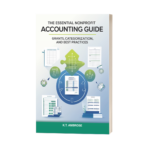
Thank you for reading The Essential Nonprofit Accounting Guide
This page is designed to support the concepts we discussed and provide you with the practical tools needed to implement them within your organization. My goal is to help you move from theory to action with clarity and structure.
Materials are intended to serve as reference and discussion aids, helping readers interpret concepts, prepare internal documentation, and better understand how governance and compliance expectations are commonly applied in practice.
Companion Material
These references relate to authoritative accounting guidance maintained by the Financial Accounting Standards Board (FASB).
Free online access to the Accounting Standards Codification is available through the FASB Codification Basic View.
View authoritative nonprofit accounting guidance on the FASB website.
Referenced Standards:
- ASC 958 – Not-for-Profit EntitiesASC 958 – Not-for-Profit Entities
Authoritative accounting guidance specific to not-for-profit entities, addressing recognition, measurement, presentation, and disclosure considerations applicable in nonprofit contexts. - ASC 606 – Revenue from Contracts with Customers. Accounting guidance for revenue arising from exchange transactions, including contracts for goods or services. In nonprofit and other organizational contexts, this guidance is commonly applied to earned revenue, program service fees, memberships, and similar contractual arrangements.
- ASU 2018-08 – Contributions Received and Contributions Made. Clarifying guidance that distinguishes between exchange transactions and contributions and provides a framework for determining whether contributions are conditional or unconditional, particularly relevant for grant agreements and similar funding arrangements.
Optional Companion Tools
Release-from-Restriction Worksheet + SOP:
Editable worksheet and brief standard operating procedure designed to support consistent tracking, documentation, and review of donor restriction releases. The materials are intended for internal use to align operational practice with existing accounting policies and oversight expectations.
These tools are optional and are not required to understand the concepts discussed in the book.
Provided for internal operational support; not legal, accounting, or audit advice.
Disclaimer: These materials are provided for educational and reference purposes only. They do not constitute accounting, legal, or financial advice. Because every organization is unique, you should review these templates with your internal finance team or a qualified professional before implementation.